Exhale
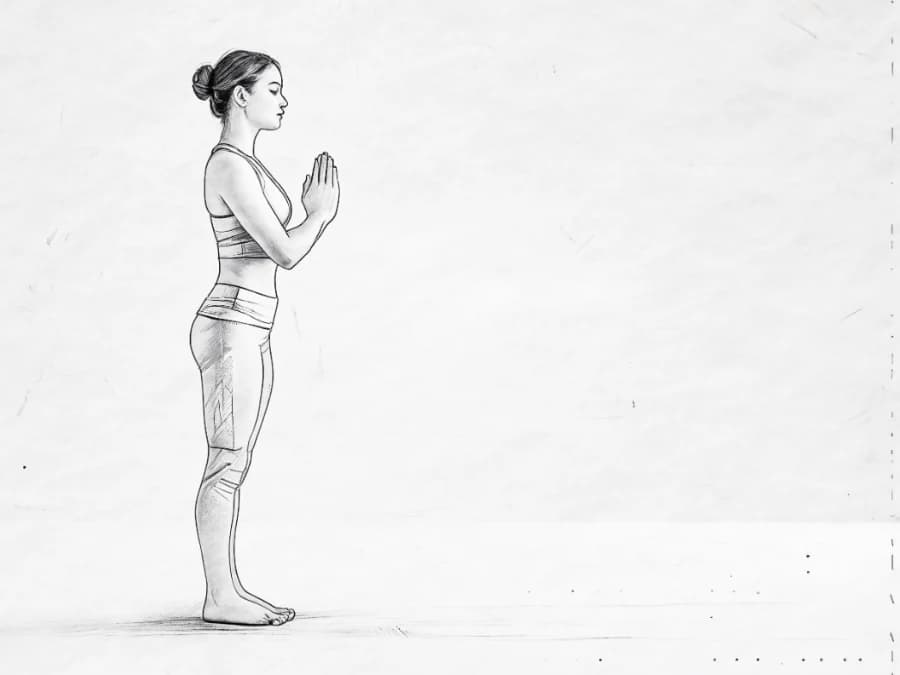
Step 1: Praṇāmāsana
Prayer pose
Stand upright, feet together, hands folded before the heart. Arrive, observe the breath.
Mantra
ॐ मित्राय नमः
oṃ mitrāya namaḥ
Salutation to the friend of all
Wiki · yoga knowledge
The sun salutation in twelve steps
Surya Namaskar (sūrya namaskāra · सूर्यनमस्कार) means “bowing to the sun”: twelve postures that flow into one another, carried by the breath and accompanied by twelve mantras. On this page you will find the sequence step by step, where the sun salutation comes from, what the number 108 means, and our song “Surya Namaskar” in the dark metal version.
What it means
Sūrya (सूर्य) is the sun and at the same time the sun god of the Vedas, namaskāra (नमस्कार) the bow, the reverent greeting with folded hands. Surya Namaskar is therefore the greeting to the sun, in some places also called the sun prayer.
The sun stands for more than the star: for light, warmth and clarity, for the power that nourishes all life, and for the awareness that rises within us. Whoever greets the sun greets this light within themselves.
Traditionally the sun salutation is practised in the early morning, facing east. In our classes it often opens the practice: it warms the body, wakes the breath and joins movement and prana into one flow.
The source
The worship of the sun is as old as the Vedas: the Rigveda sings of Sūrya in hymns of its own, and the Gayatri mantra addresses Savitṛ, the enlivening power of the sun. The twelve names that accompany the sun salutation go back to the twelve Ādityas, forms of the sun that are assigned to the twelve months of the year.
The sequence of movements itself is much younger. Bows to the sun have long been known, but today's sequence of twelve postures was only shaped in the early 20th century: Bhawanrao Pant Pratinidhi, the Raja of Aundh, made it known as a daily exercise from the 1920s on; Krishnamacharya and his students joined it to the breath as vinyasa. The form with twelve postures and twelve mantras, as we practise it, was spread above all by the tradition of Swami Sivananda.
Rigveda · twelve Ādityas · Aundh, 1920s · Sivananda tradition
Step by step
In the yoga of Swami Sivananda as we practise it, one round of the sun salutation consists of twelve postures. The breath leads: inhale where the body opens and rises, exhale where it bends and closes. Each posture has its mantra, one of the twelve names of the sun. The rounds alternate the leg: the first begins with the right leg, the second with the left (steps 4 and 9).
Prayer pose
Stand upright, feet together, hands folded before the heart. Arrive, observe the breath.
Mantra
ॐ मित्राय नमः
oṃ mitrāya namaḥ
Salutation to the friend of all
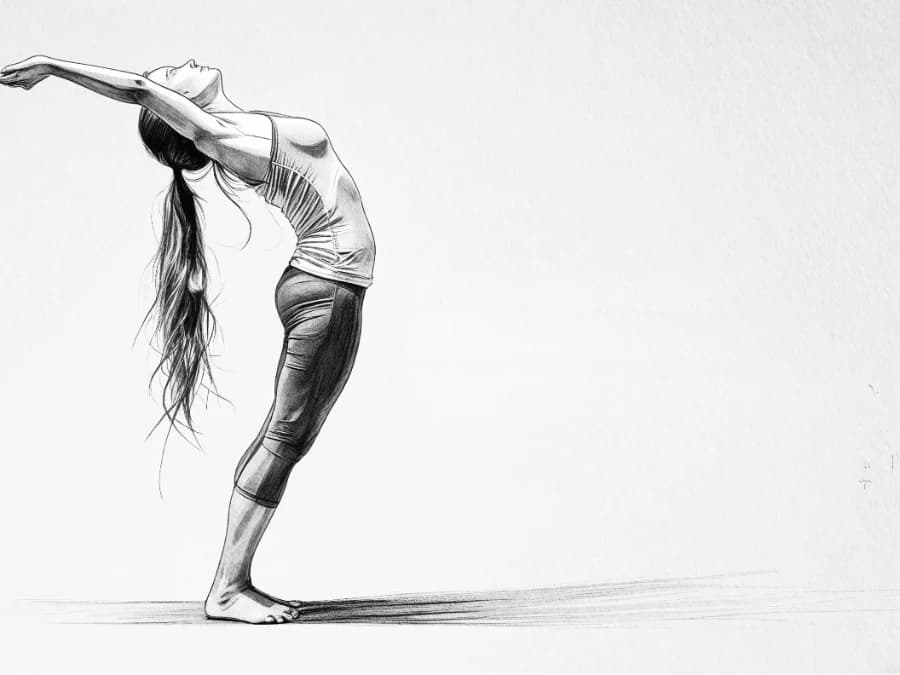
Raised arms pose
Stretch the arms above the head, open the chest, gaze and heart upward.
Mantra
ॐ रवये नमः
oṃ ravaye namaḥ
Salutation to the shining one
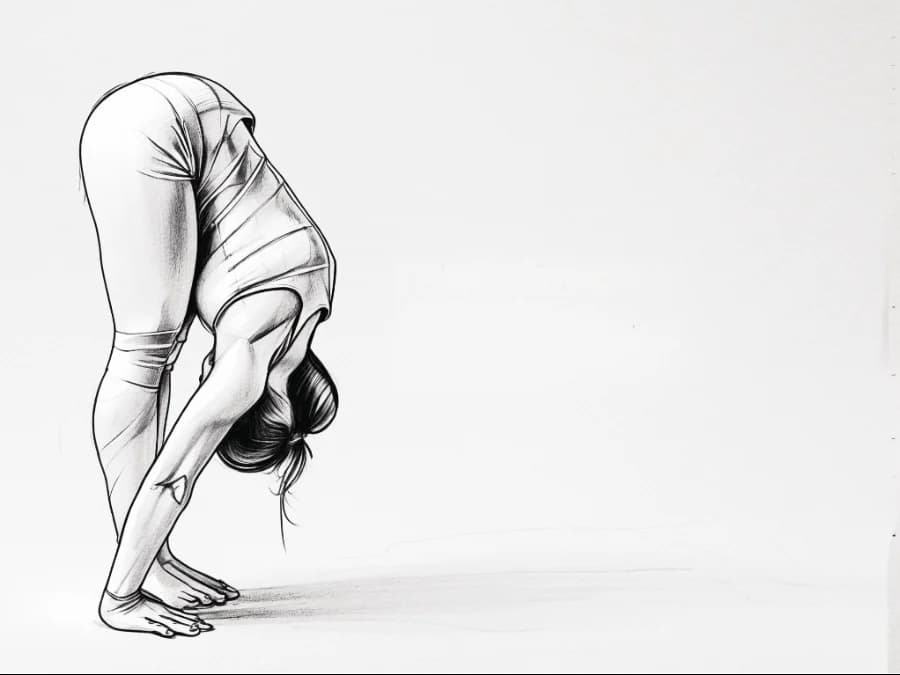
Forward bend, hand-to-foot pose
Bend forward from the hips, hands beside the feet, neck long and relaxed.
Mantra
ॐ सूर्याय नमः
oṃ sūryāya namaḥ
Salutation to the sun
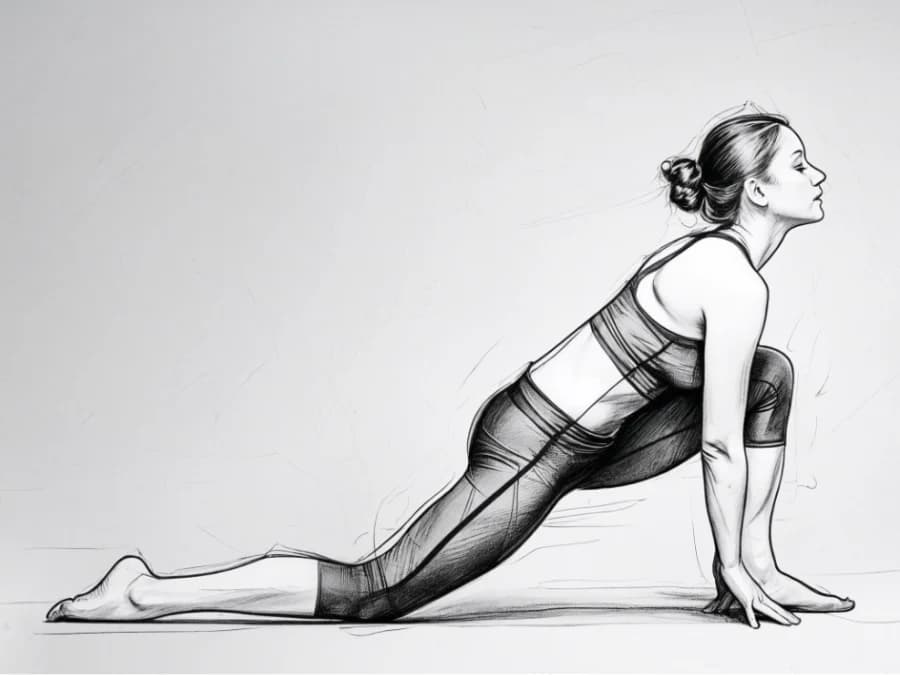
Equestrian pose, lunge
Right leg far back, knee on the floor, pelvis sinks, gaze forward.
Mantra
ॐ भानवे नमः
oṃ bhānave namaḥ
Salutation to the luminous one
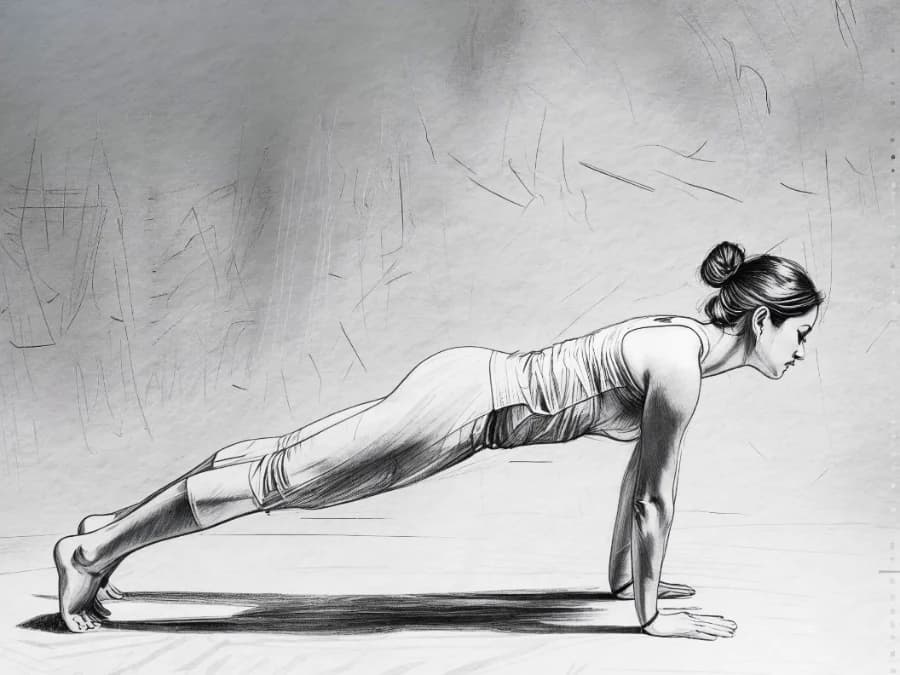
Four-limbed staff pose, yoga push-up
Bring the left leg back, the body forms one line from head to foot, belly active.
Mantra
ॐ खगाय नमः
oṃ khagāya namaḥ
Salutation to the one who moves through the sky
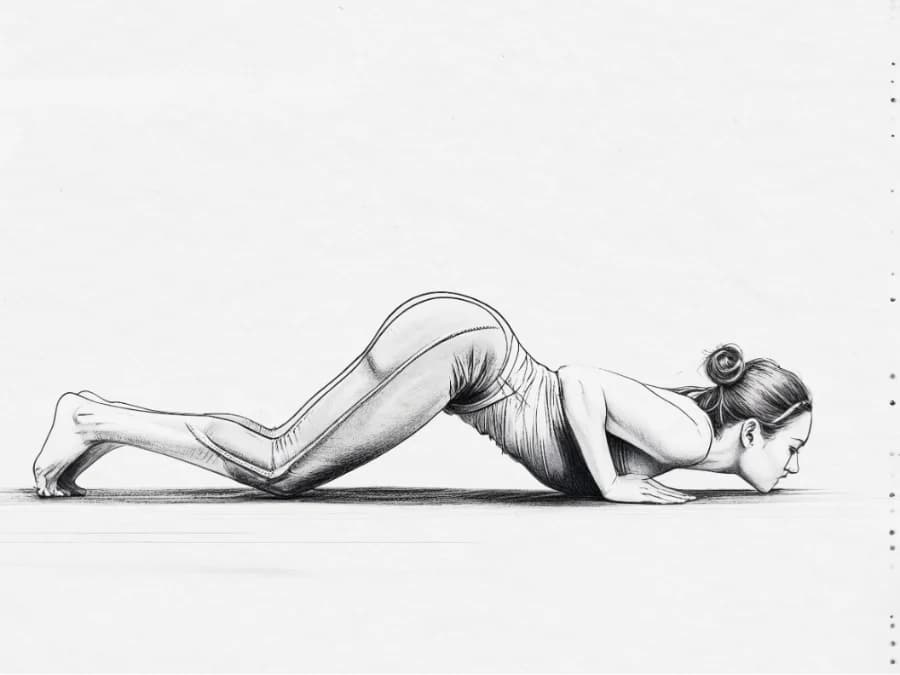
Eight-point pose, knees-chest-forehead
Knees, chest and forehead to the floor, eight points touch the earth, the pelvis stays up.
Mantra
ॐ पूष्णे नमः
oṃ pūṣṇe namaḥ
Salutation to the one who brings nourishment
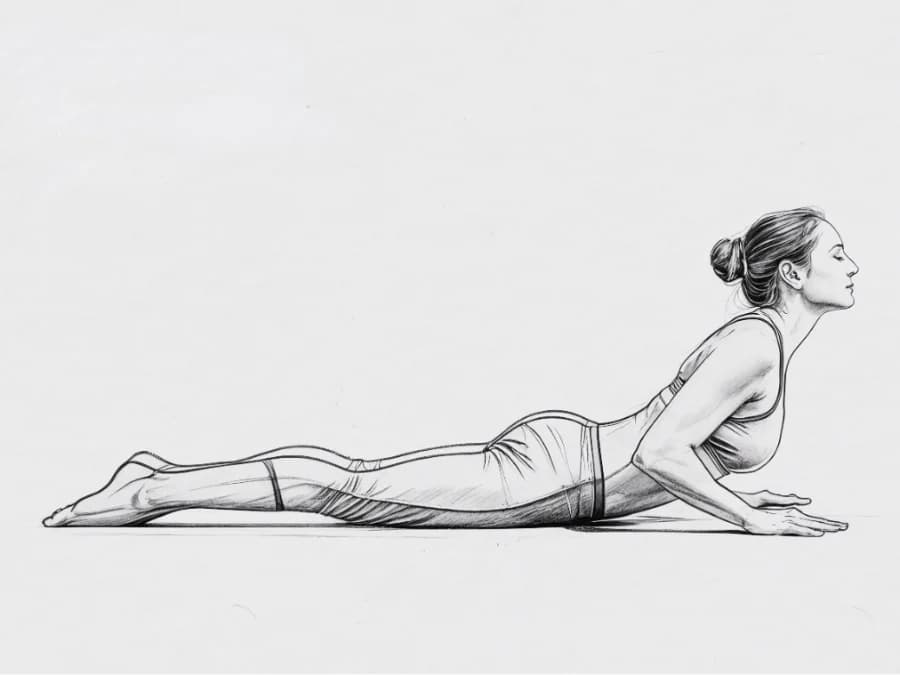
Cobra
Lower the pelvis, lift the chest forward and up, shoulders wide, gaze gently upward.
Mantra
ॐ हिरण्यगर्भाय नमः
oṃ hiraṇyagarbhāya namaḥ
Salutation to the golden womb of life
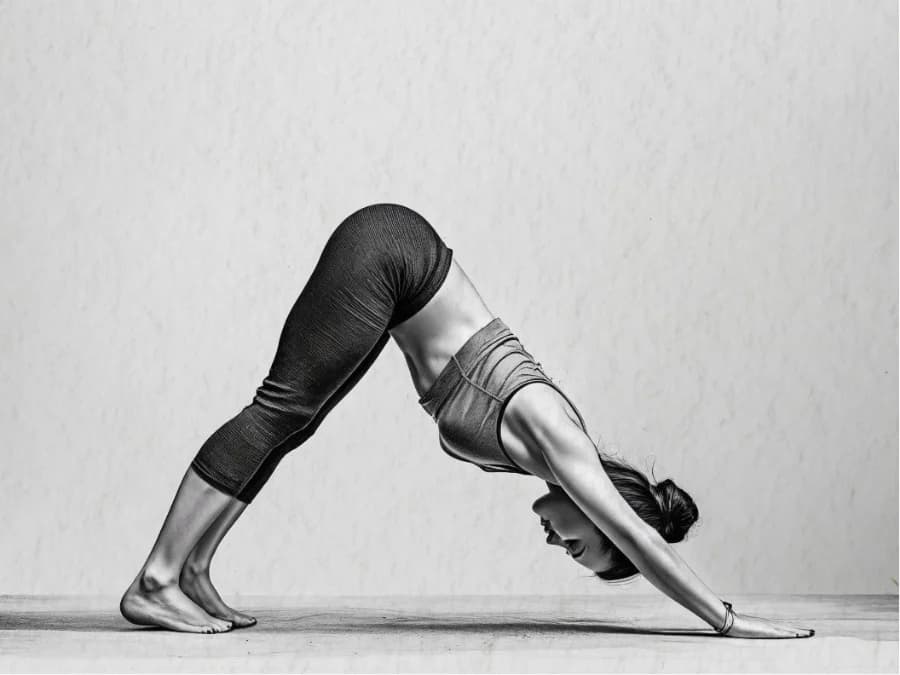
Downward-facing dog
Pelvis up and back, the body forms a roof, heels reach toward the floor.
Mantra
ॐ मरीचये नमः
oṃ marīcaye namaḥ
Salutation to the radiant one
Equestrian pose, lunge
Right foot forward between the hands, left knee on the floor, gaze forward.
Mantra
ॐ आदित्याय नमः
oṃ ādityāya namaḥ
Salutation to the son of the primordial one
Forward bend, hand-to-foot pose
Bring the left foot forward, straighten the legs, the upper body hangs relaxed.
Mantra
ॐ सवित्रे नमः
oṃ savitre namaḥ
Salutation to the enlivening one
Raised arms pose
Rise with a long back, arms above the head, open the chest.
Mantra
ॐ अर्काय नमः
oṃ arkāya namaḥ
Salutation to the one worthy of praise
Prayer pose
Hands back before the heart. Pause briefly, then the next round with the left leg leading.
Mantra
ॐ भास्कराय नमः
oṃ bhāskarāya namaḥ
Salutation to the bringer of light
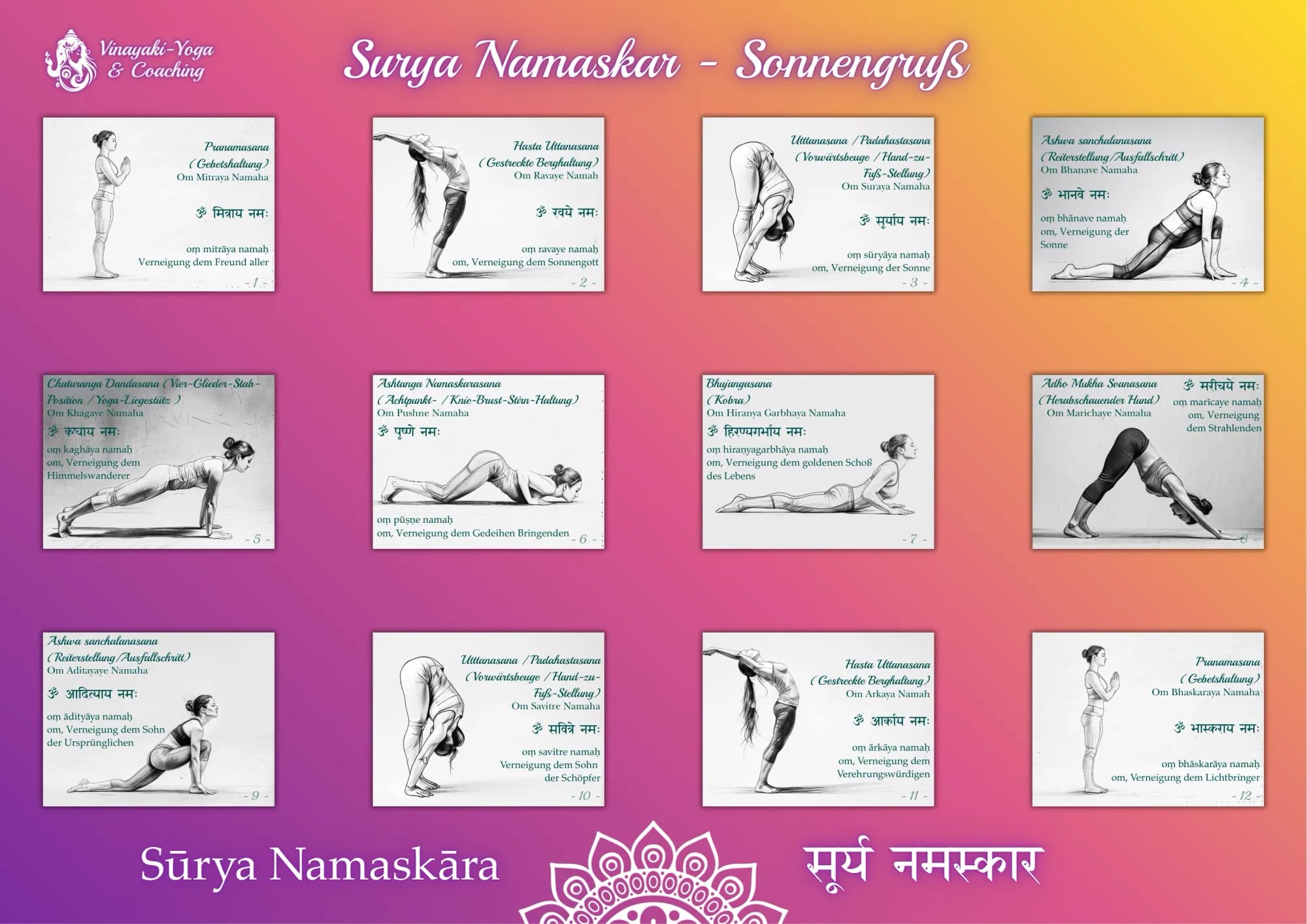
The sun salutation is practised in many variants. Our sequence follows the Sivananda tradition; with the same names and mantras you will also find it on our poster.
Drawings: created with AI, selected and edited by us.
The number
In the yoga tradition the number 108 has a spiritual meaning. One possible explanation reads the three digits one by one:
All is one
unity with the divine
Emptiness
the stillness of thoughts in the mind
Infinity
the lying eight without beginning or end
Indian deities also carry 108 names, there are 108 Upanishads, and mala prayer beads have 108 beads. 108 sun salutations are traditionally practised on special occasions: at the solstice, at the turn of the year or at the beginning of a new chapter. The practice serves purification, the strengthening of discipline and the union of body, mind and breath. Practised in a group, a strong sense of connection arises as well.
108 names · 108 Upanishads · 108 beads · 108 sun salutations
One salutation, many forms
There is no single sun salutation. Since the Aundh series of the 1920s every yoga tradition has shaped the sequence in its own way: with or without mantras, in twelve or seventeen movements, held calmly or in the flow of a single breath. The core stays the same: rising and bowing, backbend and forward bend, led by the breath. The form on this page and on the poster is the one from hatha yoga after Swami Sivananda; it is the foundation of our courses and of the 108 sun salutations.
Hatha yoga · Sivananda
Twelve postures, twelve names of the sun, practised calmly: each posture is held briefly, the breath sets the pace. Its hallmarks are the eight-point posture (Ashtanga Namaskara) with knees, chest and chin on the floor, and the cobra as the backbend. The rounds alternate the leg.
This is the form the twelve steps above show. It goes back to the tradition of Swami Sivananda in Rishikesh and is taught the same way all over the world in the Sivananda lineage.
12 postures · 12 mantras · held calmly
Bihar School of Yoga · Satyananda
The sequence is almost exactly that of the Sivananda form. Added to it are the six bija mantras Hrām, Hrīm, Hrūm, Hraim, Hraum and Hraḥ, spoken in alternation with the twelve names of the sun, and for each posture a chakra on which the attention rests.
Swami Satyananda described this form in “Surya Namaskara – A Technique of Solar Vitalization”; it is widespread in India and in the Satyananda tradition.
12 postures · bija mantras · chakra concentration
Ashtanga Vinyasa · Pattabhi Jois
Two fixed series open every Ashtanga practice. A has nine movements: standing, raising the arms, forward bend, Chaturanga, upward-facing dog, downward-facing dog for five breaths, and back. B has seventeen and adds the chair posture (Utkatasana) and warrior I (Virabhadrasana I).
Each movement lasts one breath in Ujjayi breathing, without mantras. Chaturanga and upward-facing dog take the place of cobra and eight-point posture; the legs do not alternate.
9 or 17 movements · Ujjayi · one breath per movement
Iyengar yoga
The postures resemble Surya Namaskar A, but are held longer and checked for alignment: the position of the feet, of the pelvis, of the shoulder blades. Where needed, blocks or belts help. In Iyengar yoga the sun salutation carries less weight than the individual asanas.
alignment · held longer · props
Vinyasa flow · modern hatha
Many of today’s classes rebuild the sun salutation as needed: a lunge instead of the eight-point posture, upward-facing dog instead of cobra, plus plank, warrior or balancing postures. For beginners the eight-point posture is often replaced by knees-chest-chin or a lowered knee.
The pace ranges from one breath per movement to several breaths per posture. Only the principle is binding here: breathe in as you open, breathe out as you bend.
variable · lunge · plank & warrior
Chandra Namaskar
The counterpart to the sun salutation: cooling, slow, meant for the evening. In the Bihar tradition it has fourteen postures for the fourteen phases of the moon; after the lunge, the half moon (Ardha Chandrasana) is added. The Kripalu variant moves sideways instead of forwards, with the goddess and triangle postures.
The moon salutation complements the sun salutation when the body needs rest, for instance on warm nights, when you are exhausted or to close the day.
14 postures · cooling · in the evening
In practice
The sun salutation is a complete little practice: it stretches and strengthens, wakes the breath and gathers the mind. So that it does you good:
The 108 sun salutations are by no means a must. You look after yourself and your body, and together we are glad of every round completed, whether you manage 10, 20 or 108. You can read more about the breath under Pranayama, more about the mantras under Mantra.
To take with you
All twelve postures with name and mantra on one sheet: for the wall beside your mat, or as a companion for our event.
Mantra can be modern too
The twelve mantras of the sun salutation, just as they have been sung for centuries. Only the sound is new: deep guitars, driving drums, a pulse that lets you feel the power of the sun. Mantras need not always be calm and gentle; they can show their power musically too. That is exactly what we wanted to hear. On the mat we keep practising to our own breath, but to get in the mood for our 108 sun salutations it may happily get loud for once.
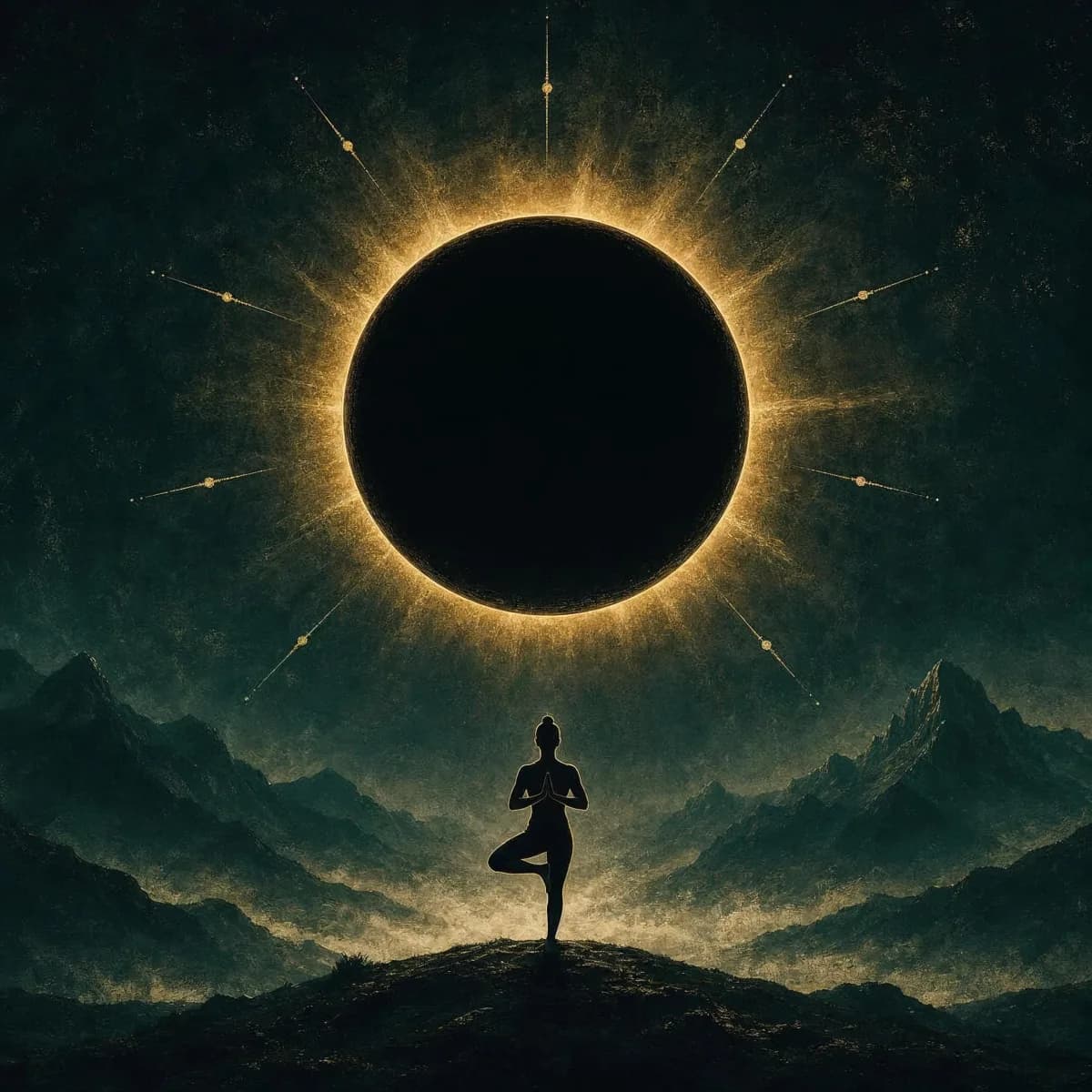
Surya Namaskar · 108 sun salutations
Vinayaki-Yoga & Coaching · dark metal version
For listening on this page · no download
The lyrics
Om three times, then the twelve names of the sun, round after round:
What the names mean is explained in the twelve steps.
Share & watch
Pass the song on as a link for Instagram, Facebook or WhatsApp, or watch the music video on our YouTube channel.
Transparency: created with AI
The idea, the selection and arrangement of the mantras and the design are by Vinayaki-Yoga & Coaching. The music was generated with artificial intelligence (Suno) in 2026. The song is meant for listening on this page; a download or further use is not intended.
Related topics
In our classes you learn the sequence step by step, and at the 108 sun salutations in the Witzeeze cultural centre we greet the sun together.